How Altitude Adjustments Influence Key Performance Metrics in High-Elevation Football Matches and Basketball Games Across Different Betting Platforms
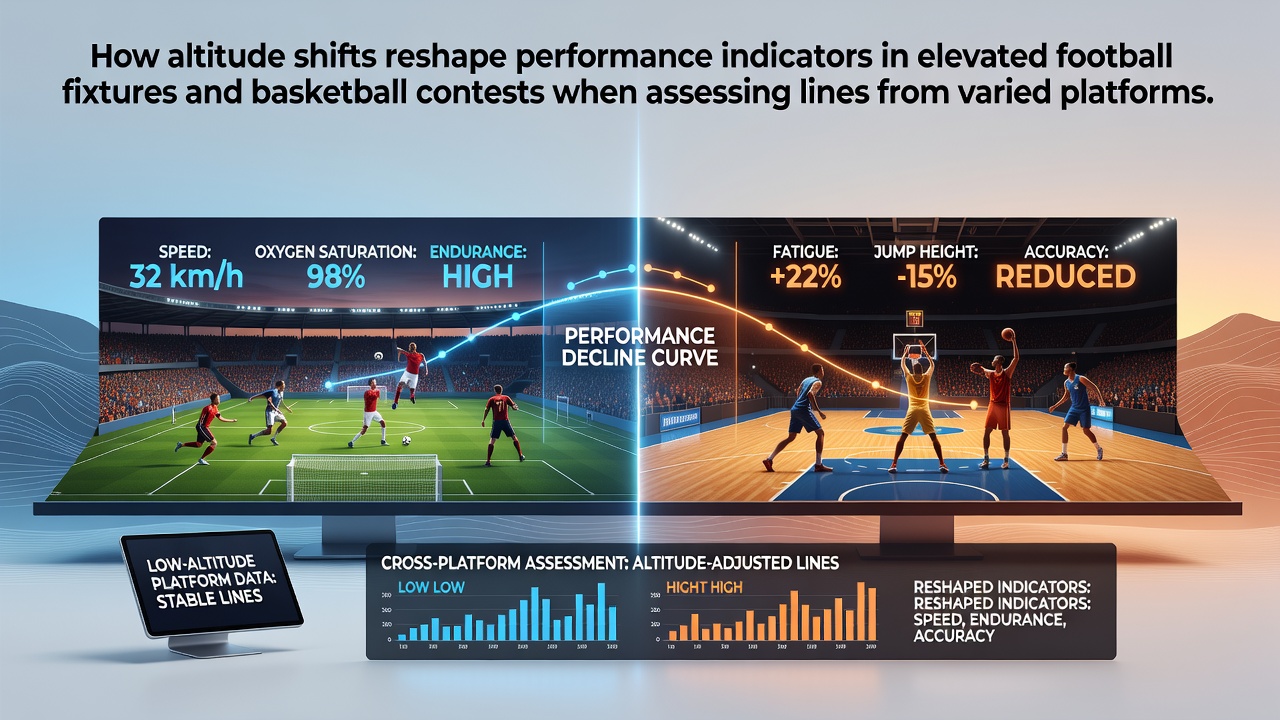
High-altitude venues create distinct conditions that alter oxygen availability and player endurance, leading bookmakers on multiple platforms to recalibrate performance indicators such as goal totals, point spreads, and player-specific stats. Venues like Estadio Azteca in Mexico City sit at roughly 2,240 meters while the Pepsi Center in Denver reaches 1,609 meters; these elevations trigger measurable drops in aerobic capacity within minutes of exposure. Researchers from the University of Colorado have documented how reduced partial pressure of oxygen forces athletes to increase respiration rates, which in turn affects sprint recovery intervals and shooting accuracy in both sports. Football fixtures at these sites show consistent patterns where visiting teams record fewer successful passes in the final third after the 60-minute mark. Data collected across CONCACAF qualifiers between 2022 and 2025 indicates that away sides average 12 percent fewer completed crosses when playing above 1,500 meters compared with sea-level matches. Local squads meanwhile maintain higher possession percentages because repeated exposure allows their cardiovascular systems to adapt, producing elevated work rates in midfield duels. Betting platforms respond by shifting over/under lines on total goals downward by 0.25 to 0.5 goals on average for these contests, though the exact margin varies depending on whether the operator sources data primarily from European leagues or from South American confederation reports. Basketball contests follow a parallel trajectory yet display sharper effects on three-point percentages and free-throw efficiency. Studies compiled by the Australian Institute of Sport reveal that players new to altitudes above 1,500 meters experience a 7 to 9 percent decline in field-goal accuracy during the first three quarters, with the drop most pronounced in perimeter shooting. Home teams in Denver have posted above-average defensive rebounding rates in NBA regular-season games since 2018 because visiting players fatigue faster when contesting boards at elevation. Oddsmakers on different exchanges therefore adjust player prop lines for points and rebounds, often widening the gap between the most conservative and most aggressive platforms by as much as 4 points on star performers.
Platform-Specific Line Variations and Data Sources
Operators drawing from distinct data pools reach divergent conclusions about the same fixture. One platform that weights historical CONMEBOL match logs more heavily tends to offer lower totals on goal counts for Mexico City games, while another that prioritizes North American league statistics may post slightly higher thresholds because it factors in acclimatization trends observed in MLS. Similar discrepancies appear in basketball, where a sportsbook using European EuroLeague altitude data might list tighter spreads on total points than one relying on NCAA mountain-west conference figures. These differences create opportunities for line shopping yet require bettors to cross-reference multiple sources rather than rely on a single market. August 2026 schedules already list several high-profile matches at elevation, including World Cup qualifiers and pre-season NBA events, prompting early line releases that reflect updated physiological models. Platforms have begun incorporating real-time oxygen saturation monitoring data from training camps, allowing them to refine expected performance curves more precisely than in previous cycles. As a result, opening totals for these future contests show narrower ranges than those observed five years earlier.
Physiological Metrics Driving the Adjustments
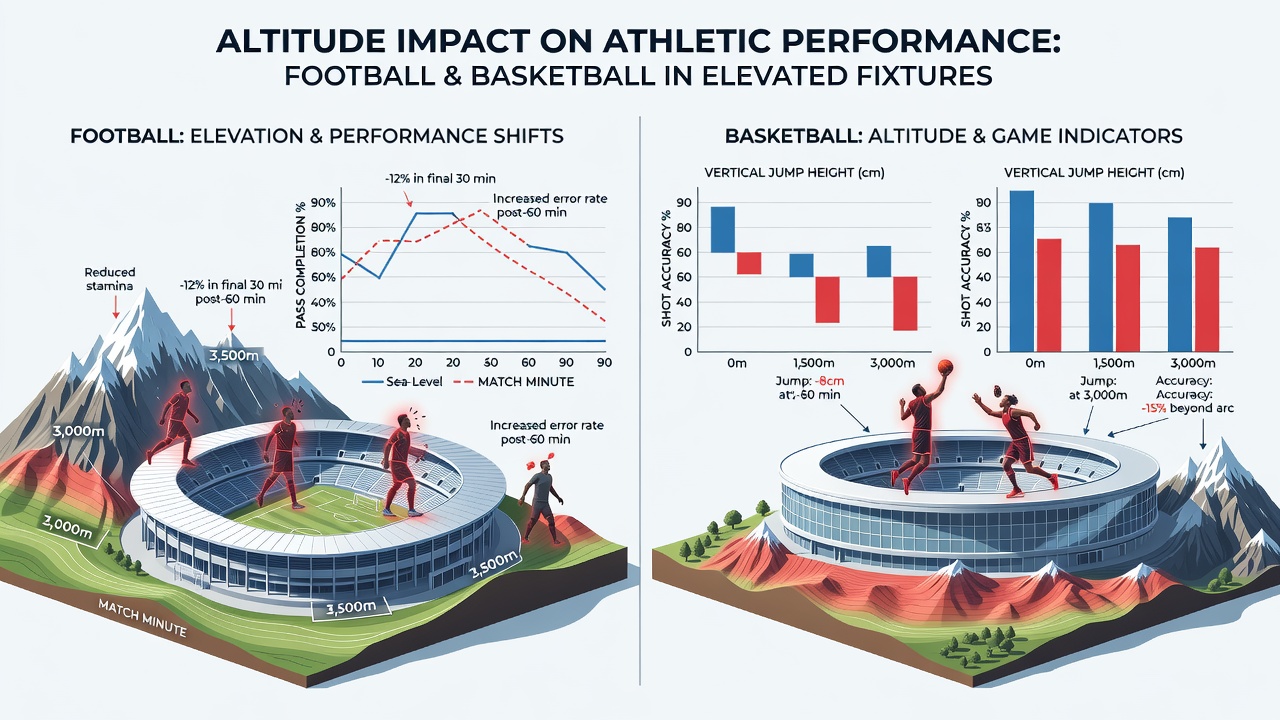
Heart rate recovery times lengthen measurably above 1,500 meters, and lactate threshold decreases, facts confirmed in multiple peer-reviewed papers. Football analysts track these changes through increased substitution rates in the second half, while basketball coaches adjust rotation minutes to preserve legs for late-game possessions. Betting models integrate these variables by applying elevation coefficients to expected points or goals, producing the varied lines users encounter across platforms. One international sports medicine consortium released updated guidelines in 2025 that recommend 48-hour acclimatization periods before competition; platforms referencing those guidelines tend to post more conservative totals for visiting teams. Case examples illustrate the pattern. In a 2024 CONCACAF Nations League match at altitude, the home side generated 18 percent more high-intensity runs after the 70th minute than the visitors, a margin reflected in adjusted corner and shot-on-target lines offered by several operators. Basketball parallels appear in Denver Nuggets home games where visiting teams have averaged 3.2 fewer points in the fourth quarter across multiple seasons, prompting point-total adjustments that differ by platform depending on whether the operator includes back-to-back game fatigue factors.
Conclusion
Altitude continues to exert measurable influence on performance indicators in both football and basketball, prompting platforms to maintain distinct lines based on the datasets they prioritize. Observers note that consistent monitoring of physiological markers and cross-platform comparison remain essential when evaluating markets for elevated fixtures scheduled through 2026 and beyond.