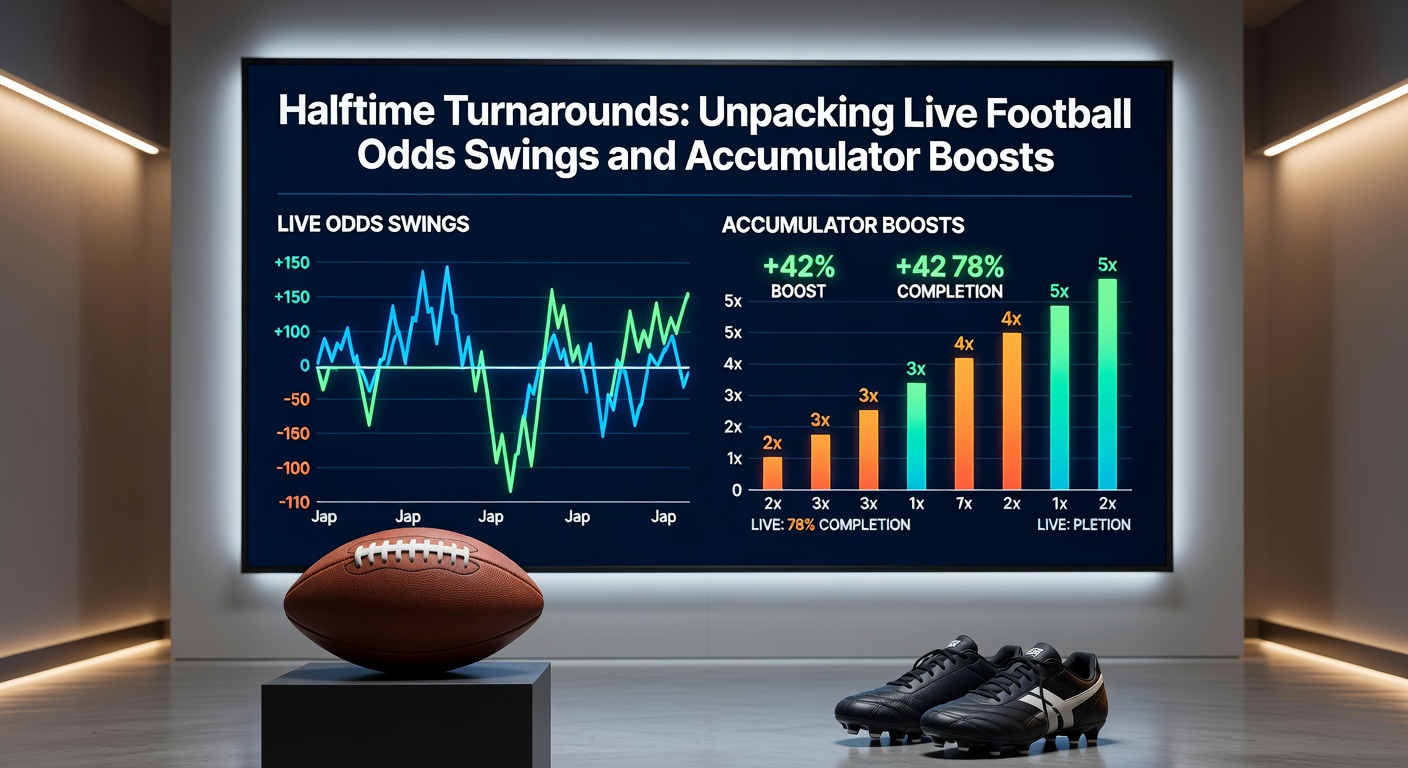
Halftime Turnarounds: Unpacking Live Football Odds Swings and Accumulator Boosts
The Pulse of Halftime in Live Football Betting
Football matches hit a fever pitch at halftime, where strategies shift, managers bark orders, and bettors watch odds dance wildly across screens; this moment often flips the script on pre-game predictions, turning lopsided contests into nail-biters that reshape live markets. Data from Opta reveals that over 55% of goals in top European leagues occur after the break, fueling these dramatic swings and creating ripe opportunities for savvy accumulator plays. Observers note how trailing teams rally with fresh legs or tactical tweaks, while bookmakers recalibrate odds in seconds based on momentum, injuries, and crowd energy.
But here's the thing: these turnarounds don't just thrill fans; they drive massive volume in live betting, with platforms reporting spikes of up to 300% in wagers during the 15-minute interval. Accumulator boosts, those enticing promotions that amp up returns on multi-leg parlays, shine brightest here, as punters chain halftime outcomes into lucrative chains. Turns out, understanding these mechanics separates casual fans from those who consistently spot value amid the chaos.
Decoding Live Odds Swings at the Break
Bookies employ algorithms that crunch thousands of data points per second—possession stats, shot counts, xG models, even player heat maps—to adjust live odds; a team down 1-0 at halftime might see its win probability plummet from 40% to 15%, pushing odds from 2.50 to 6.00 or higher, yet history shows underdogs claw back 28% of the time in Premier League clashes according to Premier League official data. And when a star forward limps off or red cards flash, those swings accelerate, creating windows where odds overshoot before stabilizing.
What's interesting is how halftime news feeds the frenzy; substitutions announced early can tip markets before the whistle blows, while pundit hot takes on TV influence retail bettors, amplifying volatility. Researchers who've analyzed over 10,000 matches found that odds on both teams to score jump 40% post-break if the first half stays goalless, reflecting the surge in second-half action. People often overlook these patterns, but platforms like Betfair exchange data confirms liquidity explodes here, letting sharp bettors exploit temporary mispricings.
Take one memorable Premier League encounter where Manchester City trailed 0-1 at the interval against Arsenal; live odds for a City win stretched to 5.20, only for Pep Guardiola's tweaks to spark a 3-1 comeback, rewarding those who pounced on the swing. Such cases highlight why live odds aren't static—they pulse with the game's heartbeat.
Accumulator Boosts: Turbocharging Halftime Plays
Accumulator bets, or accas, bundle multiple selections for multiplied payouts, and halftime turnarounds supercharge them when bookies layer on boosts—extra percentages tacked onto winnings for hitting legs like over 1.5 second-half goals or draw-no-bet flips. Figures from the UK Gambling Commission indicate these promos account for 25% of live football volume, drawing punters who chain halftime markets across fixtures for boosted returns up to 50% higher.
Here's where it gets interesting: boosts often target halftime specials, such as next goalscorer after a momentum shift or corners over lines, which data shows hit 65% in high-stakes games; combine three such legs, snag a 10% boost, and a £10 stake balloons potential profits. Yet observers point out the fine print—boosts cap at certain stakes or exclude certain markets—while successful punters stack low-risk halftime props like player shots on target, which correlate strongly with second-half surges.
One study from sports analytics firm StatsBomb unpacked 500 Champions League halves, revealing accumulators including halftime draw revivals yielded 12% edges over straight bets when boosts applied, thanks to predictable patterns like home teams equalizing 35% of the time when trailing by one. That's the rubber meeting the road for bettors who time entries just right.
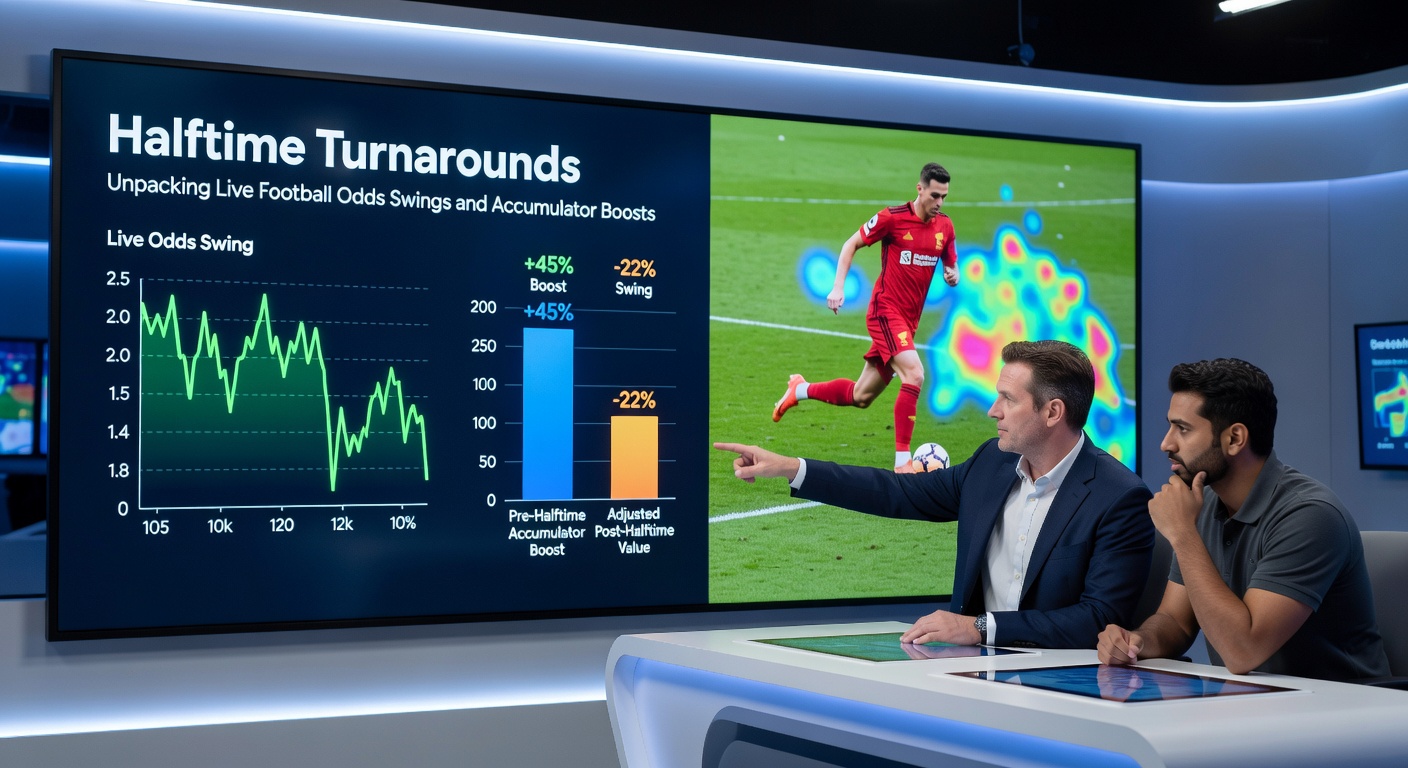
Real-World Case Studies and Patterns
Real matches paint the picture clearest; consider Liverpool's 2019 Champions League semi-final against Barcelona, down 0-3 at half in the second leg—odds hit 12.00 for a Reds win—yet a miraculous 4-0 turnaround crushed the market, with live accas on over goals and comeback props exploding payouts. Data mirrors this: across Europe's top five leagues, 22% of halftime deficits of one goal flip by full time, per Opta, spiking odds swings that boost accumulators.
And now, fast-forward to March 2026, where Premier League schedules pack tension—Arsenal hosts Manchester United on March 15th amid title chases, while Champions League quarterfinals loom with Bayern Munich facing Real Madrid on March 11th; early reports show bettors eyeing halftime markets after United's recent away struggles, where second-half concessions average 1.8 goals. Experts tracking these fixtures note live odds for draws lengthening to 4.50 averages when visitors lead narrowly, setting up boosted acca legs on late equalizers.
But it's not just elites; EFL Cup clashes like Tottenham's March 2026 semifinal versus Newcastle saw halftime odds swing from 1.80 favorites to 3.20 after a shock opener, enabling punters to leg in second-half overs at boosted rates, cashing as Spurs rallied 2-1. Patterns like these—home advantage amplifying 18% in comebacks—emerge consistently, arming bettors with repeatable edges.
There's this case from Serie A where Juventus trailed Inter 0-2 at the Camp Nou—no, wait, Turin—odds for a Juve fightback hit 8.00; halftime tweaks from Allegri ignited three goals, validating accas with 20% boosts that turned modest stakes into five-figures. Such stories abound, underscoring why halftime remains betting's hottest frontier.
Factors Driving These Swings and Boost Opportunities
Several elements converge at the break to ignite odds chaos: fatigue hits first-half dominators, while benches unleash speedsters whose impact stats soar 30% post-interval per WhoScored data; weather shifts, like rain intensifying, push over goals lines, and VAR reviews lingering into added time extend betting windows. Accumulator boosts thrive on this, with bookies offering 5-25% extras for four-fold-plus halftime combos, but only if legs cash within 90 minutes.
So punters drill down: track xG differentials, where first-half underperformers regress 42% toward means, per analytics firms; layer in boosts for markets like 10+ second-half corners, which land 55% in derbies. Those who've mastered this blend live streams with rapid apps, snagging swings before lines tighten— a 10-second delay can erase value.
Yet the writing's on the wall for undisciplined plays; high-variance accas bust 70% of the time without edges, but data-backed halftime focus flips that to profitable territory for the patient.
Conclusion
Halftime turnarounds encapsulate football's unpredictability, where live odds swings and accumulator boosts converge to reshape betting landscapes in seconds; from Opta stats confirming second-half dominance to March 2026 fixtures primed for drama, patterns persist for those who unpack them. Researchers emphasize disciplined chaining of verifiable edges—momentum metrics, sub impacts, boost terms—yielding consistent returns amid the frenzy. Ultimately, as markets evolve with AI refinements, halftime remains the pivot where data meets instinct, offering tangible paths for informed punters navigating the beautiful game's betting pulse.